
By Stuart Kime
Feedback: marking, coloured pens, grades, workload…if we were to play a word association game around feedback, what would you think of? Effective feedback can impact powerfully on a learner’s attainment, but whether that is positive or negative is down to the context and content.
There is conflicting research around what effective feedback looks like in the classroom. This is partly because feedback variables interact with so many other factors: student achievement, the difficulty of the task, student’s prior knowledge, motivation, classroom ethos, and culture all affect how effective feedback can be.
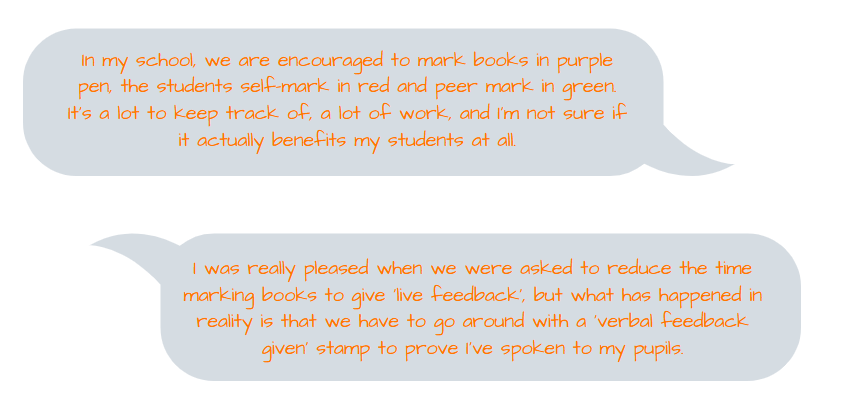
This short guide summarises research to help you consider the form and content of feedback. It is neither meant to be exhaustive not prescriptive: the most important thing about feedback is what the student does with it. A one-size-fits-all approach to feedback is not practically applicable, and sometimes practising feedback feels like a tick-box exercise:

What next?
What next?
Your next steps in becoming a Great Teaching school