
By Stuart Kime
The design of great classroom assessments is an achievable aim for teachers and school leaders. With a simple framework, assessment training and subject-specific knowledge, the quality of classroom assessment can be improved.
So what are the key elements of this framework? What are the decisions that need to be made? Above all else, the what and the why of assessment process is paramount.
The What and the Why
What – the target of your assessment (often a specific aspect drawn from the curriculum).
Why – the purpose of the assessment (specifically the uses you want to make of the assessment information).
Put in context, an evidence-based cycle of assessment design and implementation would look like this:
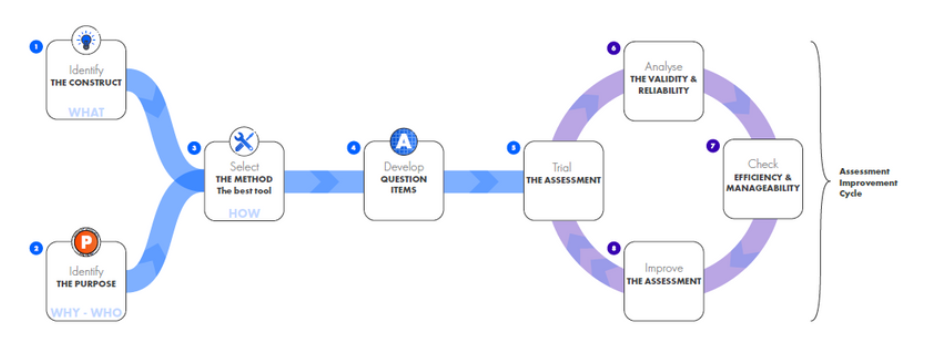
“The principles of robust assessment design” Graphic taken from our Assessment Lead Programme. Click here on the image to read more about ALP.
The How and the When
Having defined and identified the construct (the target of the assessment), and the purpose of the assessment, the next steps involve the selection of the most appropriate tools for the job. This decision will be driven by two considerations:
- Which tool is the most ‘fit for purpose’ (multiple-choice questions, short answer questions, presentations, performances…)?
- What is the most efficient way of using the tool well?
Once a decision has been made about the method and timing of the assessment, the focus shifts towards either finding existing questions or tasks which are suitable, or designing new ones. As curricular changes take place, knowing how to design good items is a useful skill; being able to apply the knowledge of good design to existing tests or ones that you might buy in is also valuable.
How Does it Work?
Having created a set of questions (generally more than you think you will need), you need to think about how much time you have available for students to take the assessment, and then trial the questions or tasks with a group of students. It’s in this trialling phase that you will discover the unforeseen surprises: the language that confuses some children, the content that is unnecessary; the fact that the there wasn’t enough time for the children to complete the assessment.
How Well Does it Work?
Trialling also generates data which can be analysed. In the Assessment Lead Programme, we provide tools which enable analysis of the reliability of assessment data, and help teachers consider the validity of the interpretations they make having looked at those data. Robust design increases the chances of increased validity of these interpretations. Analyses of the assessment data will often reveal that some questions are too easy for a certain group of students; it will also point our which questions should be improved or removed from the assessment.
Fit for Purpose
Good assessments are fit for purpose and they achieve their aims in efficient, fair and precise ways. Above all, however, they generate meaningful, useful information which is interpreted correctly; with the skills of assessment design, a teacher or school leader can create assessments achieve this important aim.
Read more in the eBook.

What next?
What next?
Your next steps in becoming a Great Teaching school